A great roofing website loads in under three seconds, puts a click-to-call button in front of every visitor, and proves you can do the work with real before/after photos, reviews, and licensing. It answers the homeowner's real question fast: can you fix my roof, are you legit, and how quick can you get here? Everything else on the page exists to move that homeowner to pick up the phone.
Roofing is a high-ticket, high-trust, high-urgency business. A replacement runs $8,000 to $30,000. A leak during a storm is an emergency. And the homeowner comparing you against three other roofers is deciding in the first ten seconds whether you look like a real company or a guy with a magnet on his truck. Your website is where that decision happens. This guide breaks down exactly what a roofing company website needs in 2026 to win those jobs.
What makes a roofing website actually generate leads?
Most roofer websites fail for the same reasons: they load slowly, they bury the phone number, and they show zero proof of real work. A homeowner with water coming through their ceiling does not have patience for a slow site or a contact form that takes 12 fields.
The roofing websites that book jobs do a handful of things well:
- Instant clarity. Your headline says what you do and where. "Roof Repair & Replacement in Fairfax County" beats "Welcome to Our Website" every time.
- Phone number top-right and everywhere. Tap-to-call on mobile, visible without scrolling. Over 60% of roofing traffic is mobile.
- Proof above the fold. A star rating, years in business, or "Licensed & Insured" badge in the first screen.
- Real photos, not stock. Homeowners can smell a stock-photo roofer instantly.
- A fast, dead-simple way to reach you. Call, text, or a short form. Name, phone, address, problem. Done.
If you want the deeper playbook on turning traffic into booked jobs, we wrote a full breakdown in how home service websites book more jobs.
Why do roofers need a website when they get referrals?
Because the referral checks you online before they call. Word-of-mouth still drives roofing, but the modern referral is "my neighbor used a roofer, let me Google them to make sure." No website, or a bad one, and that warm referral cools off fast.
More importantly, a website is the only lead source you own. Google Ads stop the second you stop paying. Angi and lead-resellers sell the same lead to five competitors. A ranked, well-built site brings in leads month after month at a fraction of the cost. We compared the math directly in website vs Google Ads for cheaper leads — for most roofers, an owned site wins on cost per lead within a year.
What should a roofing website include?
Here is the anatomy of a roofing company website that converts. Every one of these earns its place.
A before/after photo gallery
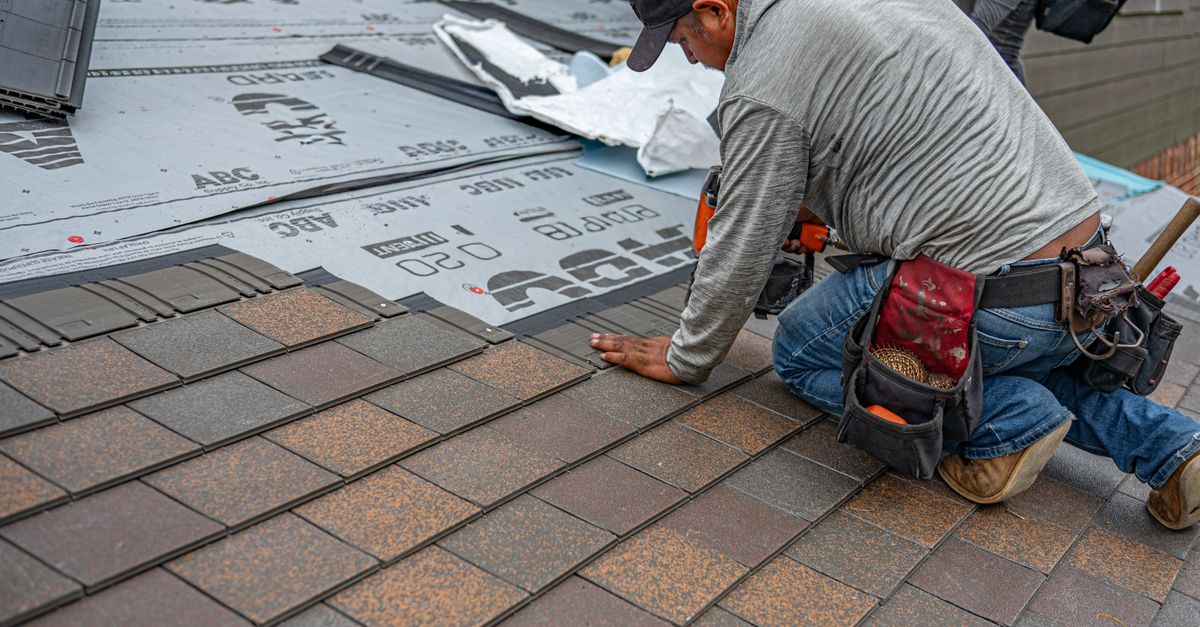
This is your single most persuasive asset. Nothing sells a roof job like showing a beat-up, moss-covered roof next to a crisp new one you installed. Organize galleries by service — shingle replacement, metal roofing, flat/commercial, storm repair. Use your own photos from real jobs. Ten strong before/afters outperform a hundred stock images.
Trust signals that justify a $15,000 decision
Roofing is high-ticket, so the trust bar is high. Put these where people can see them:
- Reviews — pull in your Google rating and star count, and quote a few by name.
- Licensing and insurance — state license number, general liability, workers' comp.
- Manufacturer certifications — GAF, Owens Corning, CertainTeed credentials carry real weight.
- Warranties — workmanship warranty length and what it covers.
- Years in business and jobs completed.
Storm damage and insurance claim pages
A huge share of roof replacements run through insurance. A dedicated page that explains how you help homeowners document damage, file the claim, and work with the adjuster positions you as the expert — and captures searches like "storm damage roof repair" and "insurance roof claim help."
Financing options
A $20,000 roof is a scary number. Showing that you offer financing — even a simple "monthly payment plans available" with an application link — removes the biggest objection and widens your customer pool.
Service area pages
List every town and county you cover, and build a real page for the ones that matter. This is how you show up when someone searches "roofer in their town]." We cover the mechanics in [local SEO basics for trade businesses.
Click-to-call and fast response
Speed wins roofing jobs. The first roofer to answer usually books the job. Make calling frictionless, add a text option, and if you can, respond to form fills within minutes. More on this in turning website visitors into phone calls.
How do I rank for "roofer near me" and "roof repair near me"?
Ranking locally comes down to three things working together: your Google Business Profile, your website's local pages, and reviews.
- Optimize your Google Business Profile. This is what powers the map pack — the three results with the map at the top of local searches. Complete every field, pick the right categories, add photos, and post updates. Our Google Business Profile optimization guide walks through it step by step.
- Build location and service pages. A page for "roof repair in town]" that mentions local landmarks, neighborhoods, and the specific service tells Google exactly what you rank for. Here is [how to rank for "near me" searches.
- Get reviews consistently. Volume and recency of Google reviews are among the strongest local ranking factors. Ask every happy customer, every time.
Do these three well and you show up for high-intent searches like "roof repair near me" — the ones where the homeowner is ready to hire today.
How much does a roofing website cost?
Honest market ranges, so you know what you are looking at:
| Option | Typical market cost | Best for |
|---|---|---|
| DIY builder (Wix, Squarespace) | $150–$500/yr + your time | Brand-new roofers on a tight budget |
| Template freelancer | $500–$2,500 one-time | Simple presence, limited SEO |
| Custom agency site | $3,000–$10,000+ | Established roofers wanting to rank and scale |
| Monthly "free site" lead services | $200–$1,500/mo, you don't own it | Fast start, but you rent it forever |
The trap to avoid is the "free" or cheap monthly website from a lead-gen company — you never own it, and the day you stop paying, it vanishes along with your rankings. Ownership matters. At Web2050 we build custom roofing sites you own outright, with hosting, unlimited edits, and support included, and we quote each project based on scope rather than a fixed sticker price. You can see the pricing approach here or browse examples of what we build.
Should I use a template or a custom roofing website?
A template gets you online cheap and fast, and for a brand-new roofer with no budget, that is a legitimate starting point. But templates share the same code and layout as thousands of other sites, they are hard to make genuinely fast, and they rarely give you the flexibility to build out real service-area and storm-claim pages that rank.
A custom site is built around your business — your services, your towns, your photos, structured to convert and to rank. For a business selling $15,000 jobs, the difference between a template and a custom site is a few extra jobs a year, which pays for the site many times over. If you are past the startup phase, custom is almost always the right call.
How fast can a roofing website be built?
Faster than most owners expect. The old model of a three-month web project is dead. With AI-assisted builds, a professional roofing website can go live in 1–2 business days. That is exactly how we work at Web2050 — you hand over your info and photos, we build it, and you are live that week, owning the site with edits and support included.
The key is not just speed but that you are not left maintaining it. Roofers roof; they should not be fighting with a website builder at 9pm. Hosting, updates, and changes should be handled for you.
The best time to build your roofing website was when you started. The second-best time is before the next storm season, when the leads are flooding in and your competitor's site is the one that answers the phone.
Putting it together
A roofing website that generates leads is not complicated, but every piece has to earn its place: fast load, phone number everywhere, real before/after proof, trust signals that justify a five-figure decision, storm and financing pages, service-area coverage, and dead-simple ways to reach you. Get those right, back them with a strong Google Business Profile and steady reviews, and you own a lead source that works while you are up on a roof.
If you want a custom roofing website built and live this week — one you own, with everything handled — get in touch with our team or check out our city-specific builds like a roofing website in Dallas or Denver. And if you are still weighing your options, our full blog has more playbooks for winning local trade jobs online.